Energy

Everything Energy

Indigenous nations aren’t just part of Canada’s net-zero future—they’re leading it. Advancing strategies and projects by articulating Indigenous perspectives concerning investment standards and sustainable business practices.

Written Materials

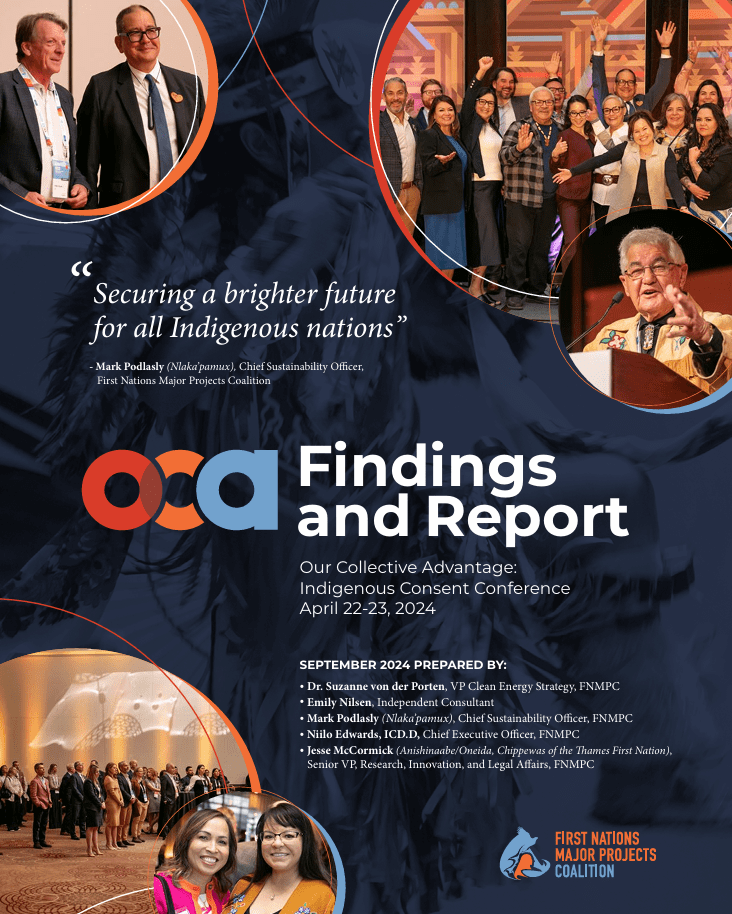
  • OCA Findings and Report
    OCA Findings and Report

    From upcoming investment opportunities for First Nations, to the launch of new resources developed specifically to support capacity for Indigenous nations — The OCA Findings and Report delves into expert knowledge, experiences, and insights collected from the 7th Annual FNMPC Conference. the overall conference narrative of Indigenous consent bringing a competitive advantage demonstrated that Indigenous nations are poised to be at the helm of Canada’s current and future major projects.

  • The OCA Conference Primer
    The OCA Conference Primer

    The world is undergoing a massive economic and environmental shift, and the consent of Indigenous nations is pivotal to making sure Indigenous nations benefit and to advancing North America’s global economic market share.

    Explore the OCA Conference Primer as it offers a window into what the contributions from experts at the conference will focus on. It spotlights groundbreaking projects and initiatives throughout Canada, the United States, and New Zealand, covering vital topics such as project governance, critical minerals, the energy transition, and empowering Indigenous ownership in major projects. With summaries of the conference’s highly anticipated keynote speeches, panel discussions, and featured models, providing readers with an in-depth understanding of the key themes leading up to the event.

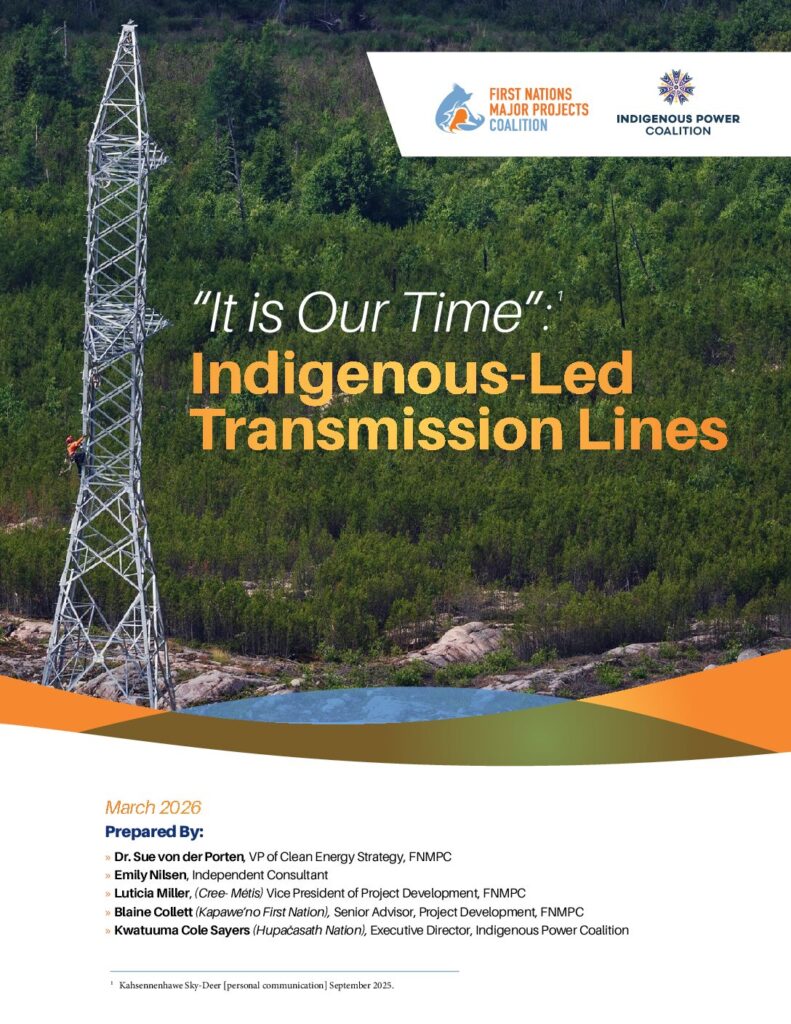
  • “It’s Our Time” Indigenous-Led Transmission Lines
    “It’s Our Time” Indigenous-Led Transmission Lines

    To meet growing electrification demands, Canada’s electricity grid will need to double or triple its capacity over the next two decades. This relies on widespread building of new transmission lines, reinforcement of existing ones, and the buildout of inter-regional grid connections (“interties”). Indigenous nations are already playing a central role in developing transmission infrastructure across Turtle Island. This makes sense, all key potential transmission corridors run through traditional territories of Indigenous nations; any new transmission line in Canada should only occur with the free, prior, and informed consent of the impacted Nations. This paper offers an overview of Canada’s transmission networks and is intended to provide First Nations with an introductory look at transmission lines and ownership—specifically those already being led by or partnered with Indigenous nations.

    Read the full report below, or here.